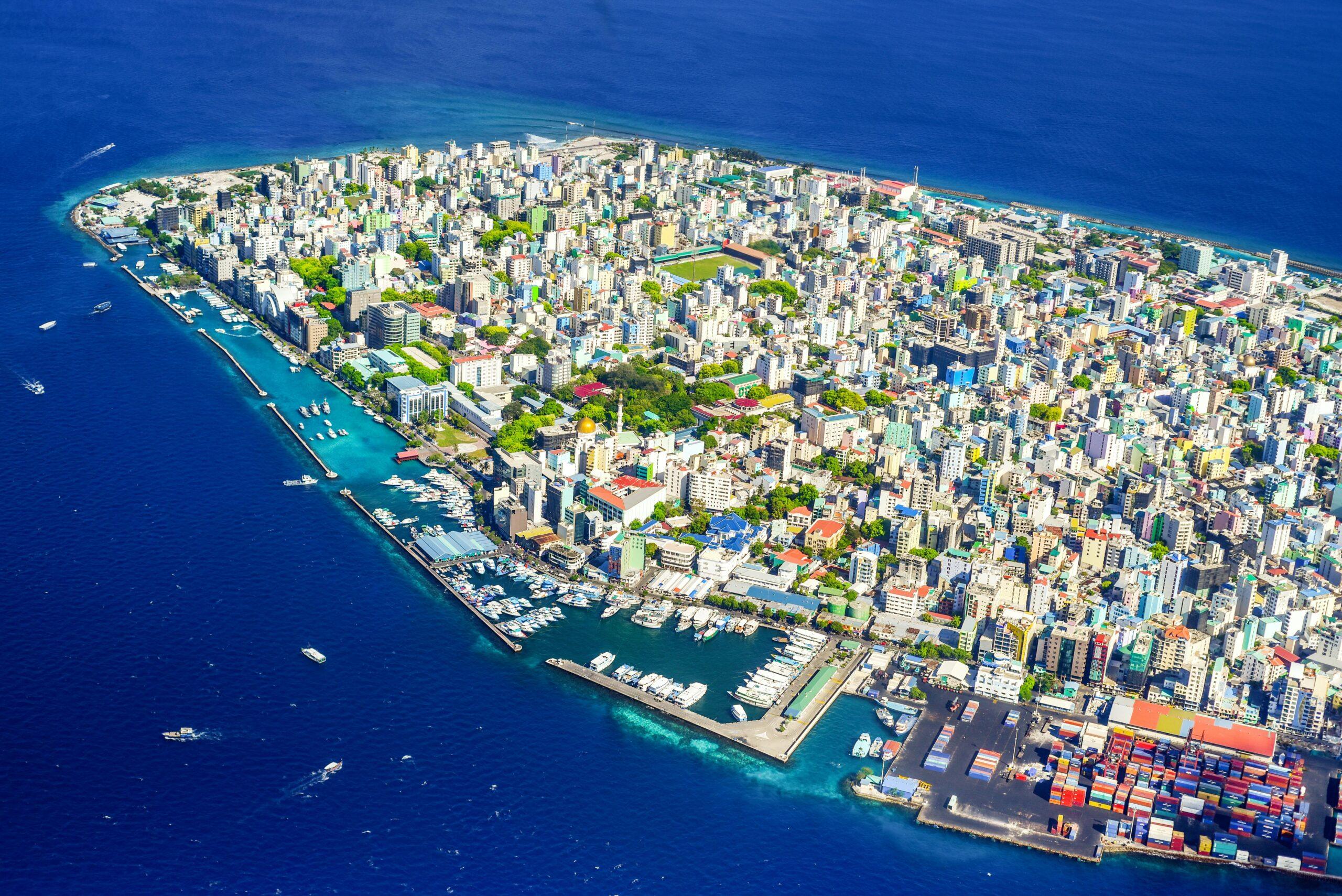
Small Island States are taking their climate change grievances to court
Small Island States took a case to the International Court of Justice (ICJ), in The Hague, Netherlands, in December 2024, seeking its opinion as to whether or not small countries can seek redress from big greenhouse gas emitting countries for damages suffered due to climate change. This case has its origin in the Small Island Country of Vanuatu, a country in the South Pacific, where an activist climate movement by students, succeeded in lobbying their government to seek assistance from the United Nations (UN) to take the case to the ICJ. The UN agreed to assist with a vote of approval from the General Assembly.
Vanuatu is experiencing a climate emergency due to sea level rise, parts of its territory are continuing to be submerged by the rising ocean. Because of this, its citizens have a special interest in the world’s effort to combat climate change and, if possible, bring the big climate polluters to justice. However, according to, news.un.org, the case at the ICJ is not a criminal case, it’s an opinion-seeking effort. It is asking the court for its opinion as to whether countries have climate change legal obligations in international law to small countries that are harmed by their actions.
The court’s decision is pending and according to news.un.org, its decision, one way or another, will not be binding but could have a psychological effect on the parties involved and could influence future binding cases. Based on the news.un.org report, the case is also significant because it’s “the largest ever seen by the world court, with 91 written statements filed with the court’s registry alongside 62 written comments on these statements”. It should be noted that this filing at the ICJ came the month after the Developed Countries agreed, at the COP 29 meeting in Azerbaijan, to provide Developing Countries with $300 billion a year until 2035 to help offset the climate change impact. The Developing Countries thought the amount was woefully inadequate. The funds are part of the obligations agreed to under the Paris Agreement.
Based on another edition of News.un.org, many countries spoke at the ICJ hearing, of note was Brazil which contended that Developed Countries should bear the extra burden for climate change. China argued that “developed nations must bear historical responsibility while developing countries require longer timelines to meet climate goals.” Mass industrialization in China is probably about 70 years old, whereas the industrial revolution began in England about 200 years ago, based on this, China doesn’t believe it has ‘historical’ responsibility for climate change damages as the ‘old’ industrial powers (like Europe) do. In fact, in the context of the Paris Agreement, China is categorized as a Developing Country.
The United States, in its deposition before the ICJ, espoused the view that differentiation in climate responsibilities is not supported by international law. It was of the opinion, it seems, that the principles of the text of the Paris Agreement should continue to be the legal force behind climate change issues and not judgments by courts.
In July 2025 the ICJ ruled in favor of the Small Island States, “the UN’s principal judicial body [the ICJ] ruled that States have an obligation to protect the environment from greenhouse gas (GHG) emissions and act with due diligence and cooperation to fulfill this obligation,” news.un.org says, and that “the Court further ruled that if States breach these obligations, they incur legal responsibility and may be required to cease the wrongful conduct, offer guarantees of non-repetition and make full reparation depending on the circumstances.”
According to news.un.org, in making its judgment in the case, the court relied on the existing international treaties Developed Countries signed in relation to the environment, the rights of global citizens, and the general globally acknowledged obligations that flow from those signed agreements. Regarding the environment, for example, “member states are parties to a variety of environmental treaties, including ozone layer treaties, the Biodiversity Convention, the Kyoto Protocol, the Paris Agreement, and many more, which oblige them to protect the environment for people worldwide and for future generations,” news.un.org says.
The ICJ was formed by the United Nations. It decides issues between and among nations but without an enforcement mechanism to support its rulings. It’s yet to be determined if civil courts, which have enforcement capabilities, will eventually use this ICJ ruling as a precedent.