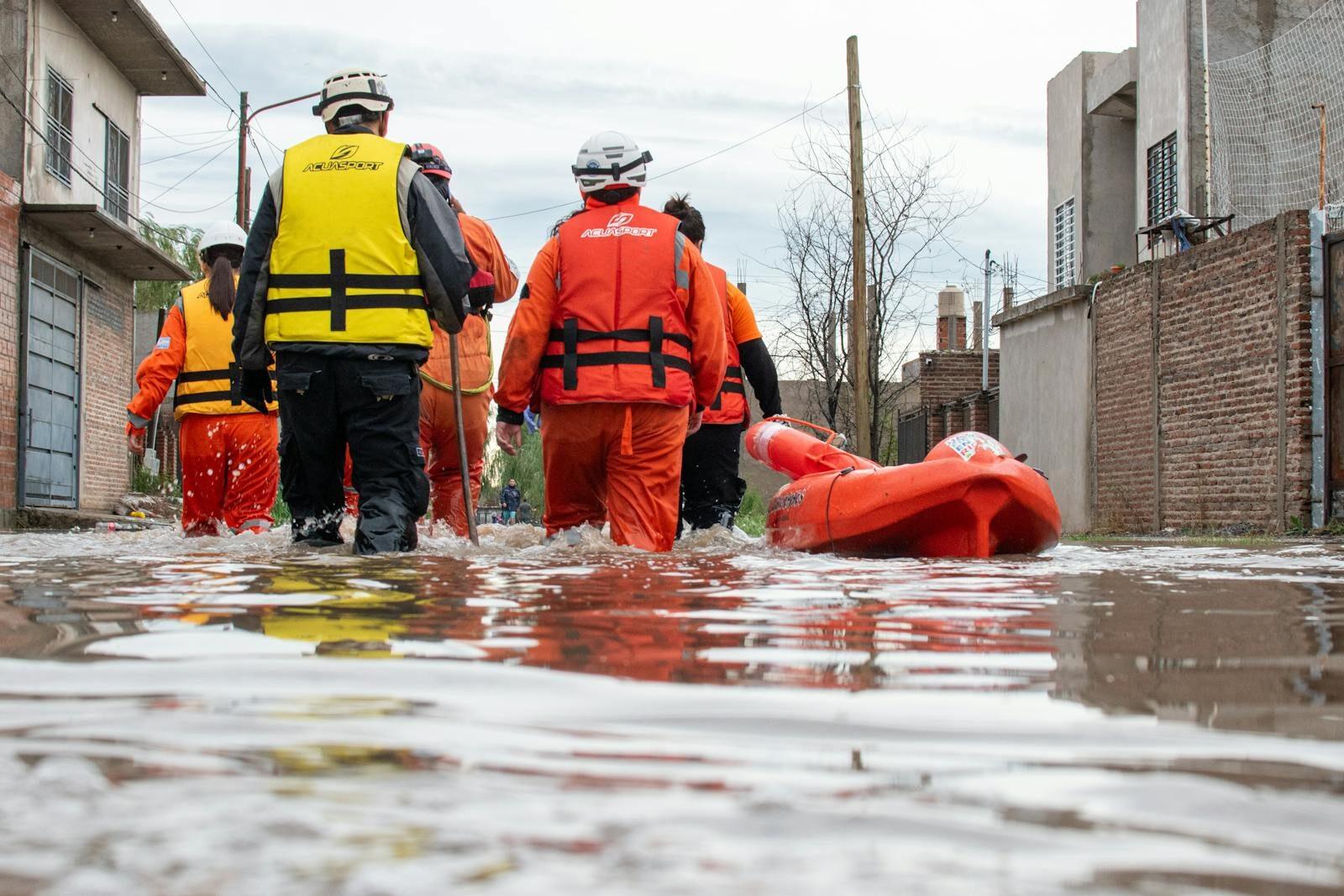
For Brazil, floods seem to pose the biggest climate change challenge
Like most other countries Brazil has experienced the varied effects of climate change but the devastating floods that occurred in May, 2024 stand out as the most devastating climate change events Brazil has witnessed in recent times. These floods, according to Preventionweb “led to more than 175 deaths and 423,000 people displaced in the southern Brazilian state of Rio Grande do Sul in May. It was the state’s worst natural catastrophe in almost a century.” It argues that Brazil has a long history of floods and other disasters, influenced by climate change, that have continually impacted citizens’ way of life, “Over the past two decades at least eight million Brazilians have fled or migrated due to storms, floods, forest fires, drought, and sea-level rise. In 2023 alone, around 745,000 people were displaced by extreme climate events combined with the effects of El Nina and El Nino. These events not only reveal the perils of a changing climate, but also a public that is unprepared for the coming storms.” El Nina and El Nino are natural weather patterns that help to influence the weather.
Preventionweb is indicating that Brazil is not doing well at adaptation even as temperatures are expected to rise to significant levels in the coming years. It recommends that climate policies be updated and policy coordination between federal and local authorities be improved. It also recommends that early warning systems be more broadly distributed together with infrastructure upgrades and the formation of better internal migration policies to assist citizens trying to escape climate change catastrophes.
In early January, 2025, the southern Brazilian state of Santa Catarina, that shares border with state of Rio Grande do Sul, experienced widespread floods to the extent that a state of emergency was declared by local authorities. MercoPress quoted the State’s Governor as saying “it rained, in a few hours, about 130 millimeters in the cities of Itajaí, Camboriú and Balneário Camboriú. More than half the volume expected for the entire month of January.”
In June, 2025, floods returned to the southern Brazilian state of Rio Grande do Sul, the same state that experienced cathrosphic floodings in may 2024. As told by the International Organization for Migration, IOM, writing with the headline “IOM Assists Displaced Families as Floods Hit Brazil’s Rio Grande do Sul Again,” Claimed at the time of writing that, “More than 5,000 people have been displaced, with over 1,000 currently staying in temporary shelters. Local authorities report four deaths, one person missing, and damage across 132 municipalities.”
Brazil may be falling short in climate adaptation, but the result is more positive in terms of mitigation. According to Ember-Energy “Brazil is a leader in renewable electricity within the G20 and has already exceeded its goal of generating 84% of its electricity from renewable sources by 2030,” and that “Brazil relied on fossil fuels for just 10% of its electricity in 2024. Its power sector emissions per capita were the lowest in the G20 and a fifth of the global average.” Ember-Energy is contending that 90% of the electricity generated nationally in Brazil in 2024 was done using renewable energies like wind, solar and hydropower, etc., it points out that that was more than double the global average of 41% and that hydropower alone comprised of 56 of the 90% of the renewable electricity generation.
The Brazilian Amazon Rainforest and its huge river systems have been utilized by Brazil to construct elaborate hydro dams for electricity production, not many countries have such an opportunity. Some climate observers contend though, that the creation of the dams have contributed to deforestation and some degree of destruction to biodiversity ecosystems in the Rainforest. Some are also concerned that hydro dams, which benefit the climate by eliminating the use of fossil fuels, may not provide long term benefits because they could themselves, at some stage, become susceptible to droughts, one of the major impacts of climate change. The Brazilian Amazon Rainforest and its significance to the world’s climate is discussed more fully elsewhere.
Climate mitigation is also being realized in Brazil by widespread use of electric vehicles, to counter greenhouse gas emissions. Datamarnews, an online business news outlet that reports on South America, states that “Brazil’s electric vehicle market saw significant growth in 2024, with sales surging 89% year-over-year to 177,538 units”. the article claims that demand for electric vehicle is expected to increase mainly due to citizens’ awareness, vehicle-charging availability and battery improvements.
An article written in October, 2025, CnEVPost, which addresses Chinese EV companies, including the role they play in the international market, announces that Chinese companies began making EV’s in Brazil starting in 2025. “BYD’s passenger vehicle plant in Brazil officially commenced production on July 1 in Camacari, Bahia State,” and that “the facility represents a total investment of 5.5 billion reais ($1 billion). Phase one targets an annual production capacity of 150,000 NEVs, according to a previous announcement.” BYD is the number one EV manufacturing company in China, in terms of sales, and it plays a major role in the global EV market both in sales and manufacturing. NEV’s is an abbreviation for new energy vehicles or EV’s, as they are generally called. In October, 2025, BYD celebrated a global milestone that occurred at its factory in Brazil, “the company’s 14 millionth NEV rolled off the production line at its Brazilian factory on October 9. Brazilian President Luiz Inacio Lula da Silva witnessed a ceremony and became the owner of the vehicle, BYD announced today on Weibo,” CnEVPost reported and “the vehicle is a BYD Song Pro, which was gifted to Lula.” BYD vehicles are quite popular in Brazil so manufacturing locally is an attempt to meet local demand but also to avoid impending tariffs restrictions being triggered by economic nationalist sentiments in Brazil.
——————————————————————————————–