Dominican Republic and its experience with climate change

Climate change is having a big effect on the Dominican Republic. Hurricanes or fierce tropical storms, floods and Droughts are probably causing the major impacts.

According to worlddata.info, the last major hurricane to make landfall in Dominican republic was the category 5 ‘Beryl’, in June, 2024. The Dominican Republic, a Caribbean country, is not situated within the Caribbean’s traditional hurricane route. Worlddata states, “like many other countries in the Caribbean island chain, the Dominican Republic lies just slightly south of the Atlantic hurricane belt,” so because of this, the country usually escaped direct hits from hurricanes and tropical storms, and even though there are usually widespread damages to buildings and vegetation from hurricane winds, “the far greater damage is caused by the enormous amounts of rain that fall from the hurricane. Flooding not only leads directly to fatalities but also paralyzes large parts of the [country’s] infrastructure,” according to Worlddata.

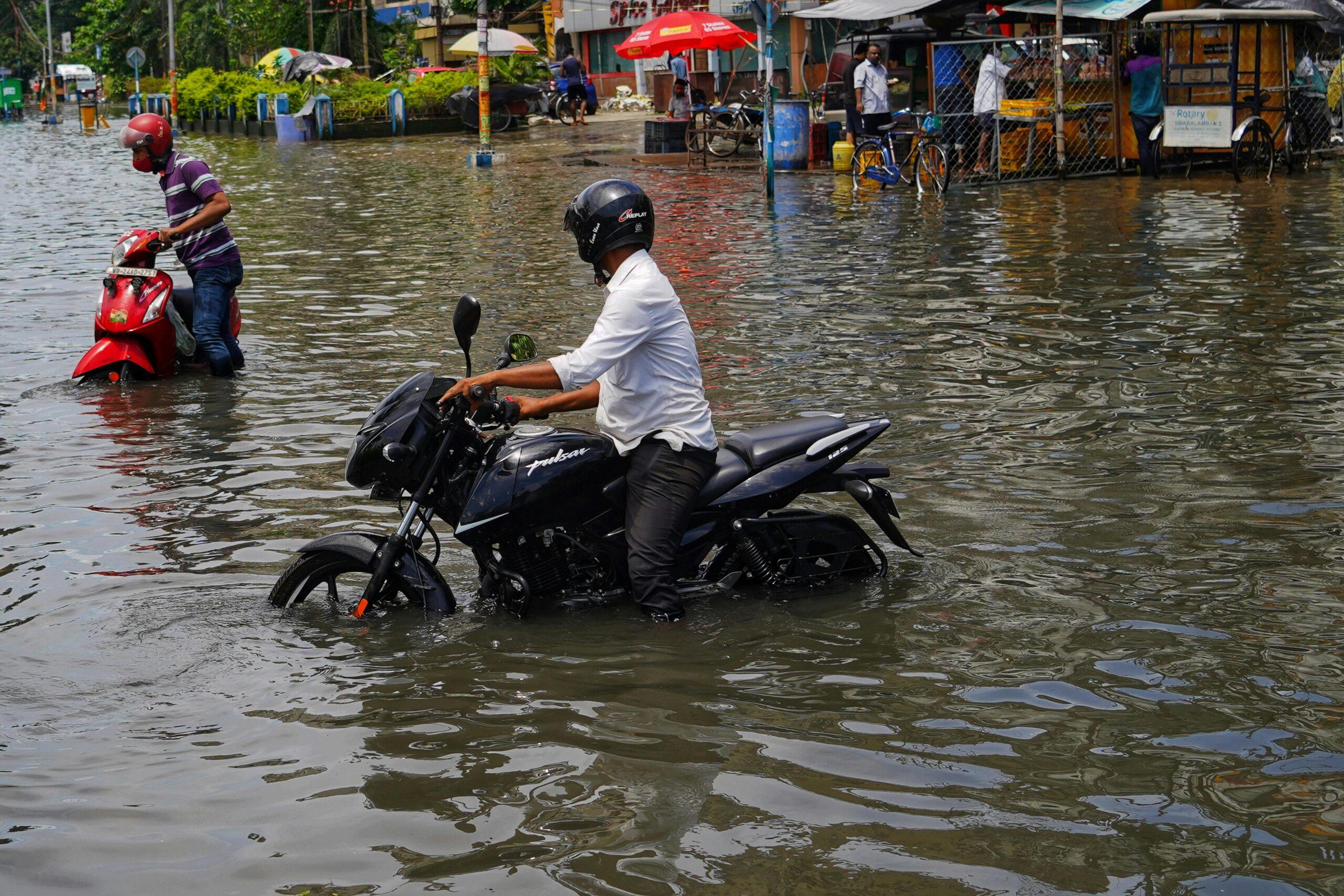
Recent floodings caused by rainstorms took place across the country including Puerto Plata in late April , 2025, see the images posted April 29, on X, (formerly twitter) by @_GlobalCrisis_. Dominicantoday.com on May 3, 2025 quoted the town’s Emergency Operations Center saying that “heavy rain in recent days across much of the country have left 13 communities isolated, 2450 people displaced and 490 homes affected.” It also stated that “the provinces with the highest rainfall are Hermanas, Mirabal, Espaillat, La Vega, Puerto Plata and San Cristobal.”

Hurricane Beryl, mentioned above, brought devastation to the Caribbean in June 2024. After causing major floodings in the eastern Caribbean Islands, it moved on to the Dominican republic, Haiti and Jamaica. The Dominican Republic escaped a direct hit and the hurricane impacted mostly parts of the southern portion of the country. As Disasterscharter.org tells it, “Flooding was reported in the neighbourhood of Ciudad Nueva, disrupting traffic. Large waves scattered debris on a section of the Las Américas Highway in Santo Domingo,” and “the hurricane displaced 89 people and cut service to 57 aqueducts.” Rainstorm caused widespread floodings in Puerto Plata and surrounding areas in December, 2024 as well, as a post on X (formerly twitter), by @weathermonitors, on December 23, 2024 demonstrates. Regarding the same weather event, on December 24, 2024 dominicantoday.com reported that “the emergency operation center (COE) has reported that over 11,300 residents in Puerto Plata have been displaced due to severe rainfall, with 2260 homes affected. This crisis has led to a red alert in Puerta Plata, while 5 provinces are under yellow alerts.”

The history of floods in the Dominican Republic is rather extensive. The publication floodlist.com on November 20, 2023 stated, “in the Dominican Republic, floods, heavy rain and landslides have damaged 5 bridges and 6 roads. At least 45 communities have been left isolated. Emergency teams have been working across affected areas and managed to rescue 2,451 people.” It further reported that 13,220 people were evacuated, 2,644 houses were damaged and 21 people lost their lives.

Floods from a rainstorm affected Dominican Republic again, along with Haiti, in late January 2022. A report by floodlist.com on February 1, 2022 quoted a civil defense personnel as saying “the heavy rains affected Puerto Plata, Santiago, La Vega, Valverde and Montecristi,” causing flooding in some sectors of there provinces. and that “as many as 3,444 homes were flooded and 1,720 people displaced.” Puerto Plata is situated on the Atlantic coast in the northern part of the country and is well known internationally as a tourism center.

Not too long ago, potential mass flooding from an overflowed Dominican Republic lake, triggered the extraordinary decision, by authorities, to relocate the entire lakeside community of about 3,000 people to a safer elevated location. This took place in 2014. Water from Lake Enriquillo, located in the south western part of the country, near the Haitian border, was at an elevated state and threatened the submersion of the community of Boca de Cachon. The entire commumity was relocated by the Government. As Besnet.world reported, “Boca de Cachon could be considered the first human settlement formally displaced because of climate variability in the Dominican Republic and probably one of the first in the Americas in the twenty-first cenrury.”

Drought is also a persistent issue in the Dominican Republic, and this is of severe effect on local communities where water sometimes is in short supply both for agricultural and domestic use, especially during periods of little or no rainfall. Also, nationally there is some concern about depleting fresh water availability. Dominicantoday.com referring to a book written by Domingo Marte, argued that “the decrease in the quantity and quality of water in rivers can de attributed to deforestation in the upper and middle regions, as well as the erosion of riverbeds in the lower areas. Chemical contamination, waste disposal and solid waste also contribute to significant water loss.” To escape the water scarcity, some towns or areas are resorting to ground water extraction via wells, for example, Cap Cana a gated tourism area within the general Punta Cana resort community in the eastern tip of the country, has been using this method as a dependable water source. Dominicantoday.com reports on ‘Observing Water Day’ in March 2024, a conference on water issues, held in Cap Cana, that there was “an enlightened discourse addressing the prevailing water challenges across the Dominican Republic, including droughts and underground water reserves depletion due to climate impacts.” At this conference appreciation was given to the Juanillo Tourist Aqueducts Corporation, ACUATUR, and the success it is experiencing in reliably providing the Puna Cana area with ground water. It was revealed by Dominicantoday.com that “ACUATUR operates five wells located 13.65 kilometers inland [from Punta Cana], equipped with a 400 mm diameter drive line to pump water. Adittionally, the corporation manages 30 pumping stations to collect and treat wastewater, subsequently repurposing it for irregation purposes across various green spaces.”

In December 2024 Biwater International LTD, biwater, a UK based company, signed a Memorandum of Understanding with ACUATUR in Cap Cana, to join forces in order to “ensure the sustainable provision of water to meet the growing demands of Cap Cana while supporting the long term operation and maintenance of its water supply and sanitation systems.” The Memorandum of Understanding “includes the desalination of brackish water from a borehole well field, ensuring the sustainable provision of water to meet the growing demands of Cap Cana.” Biwater has provided similar services in other areas of the Dominican Republic and in Latin America. Punta Cana, Juanillo and Cap Cana are located in the same geographical area in the eastern tip of the country and together are the principal players in the area’s vibrant tourism sector.

From the standpoint of renewable energy, the Dominican Republic is heavily dependent on fossil fuels, primarily natural gas, for electricity generation. Using a climate consultant as a source, Climatetrackercaribbean states that “in 2023, 85% of DR’s (Dominican Republic’s) energy came from fossil fuels, while only 15% came from renewable sources-hydropower at 4.8%, wind at 4.7%, solar at 4.6% and biomas at 0.9%.” It also states that “currently the energy sector accounts for 62% of greenhouse gas (GHG) emissions” in the Dominican Republic. Households and industries are being encouraged to incorporate renewables as sources of energy, but as Climatetrackercaribbean further states, “between 2011 and now, at least 17,529 customers in the country have installed rooftop solar panels.” Not a spectacular progress, but still a move in the right direction. More impressive though, is that between 2020 and 2023, renewable energy in electricity generation in the Dominican Republic increased to more than 103%, Climatetrackercaribbean claims.

To reduce greenhouse gas emissions, the Dominican Republic’s transportation industry has been steadily incorporation electric vehicles, into its transportation mix. As stated by an article in GlobalVoices, in October 2024, “the government delivered 150 electric buses for school transportation”. The article makes mention of ‘Evergo’ and the impressive role its playing in the provision of charging stations in the Dominican Republic, claiming it “launched the first charging station in 2019. It now has over 560 stations, 487 of which are publicly accessible, while the rest are in private locations , including businesses and residences.” It further states that Evergo has “recently installed the first fast-charging station for electric vehicles in the Caribbean and Latin America, located in Punta Cana…the fastest available in the region.” Evergo, on its website states, “Evergo is the most sophisticated platform for electric vehicle charging stations in the Caribbean, Latin America and Jamaica …moving you towards a more environmentally responsible future.” GlobalVoices (mentioned above) states that “between 2020 and 2023, there was a 60% increase in electric vehicle registrations” in the Dominican Republic, and that based on a report from the National Statistics Office “3,043 electric vehicles have entered the country over the past four years.” Motorcycles are a popular form of transportation in the Dominican Republic and this sector is also steadily moving away from fossil fuels, according to Globalvoices, “in 2023 there were as many as 14,000 electric motorcycles on the country’s roads, some also used for deliveries.” The article argues that EV sales could be helped by further government subsidies and access to more charging facilities in non-urban communities. It cites increased climate awareness as helping to foster EV sales and claims EV industry stake holders are continually engaged in climate change public awareness enhancement efforts.

——————————————————————————————–