What is climate change?
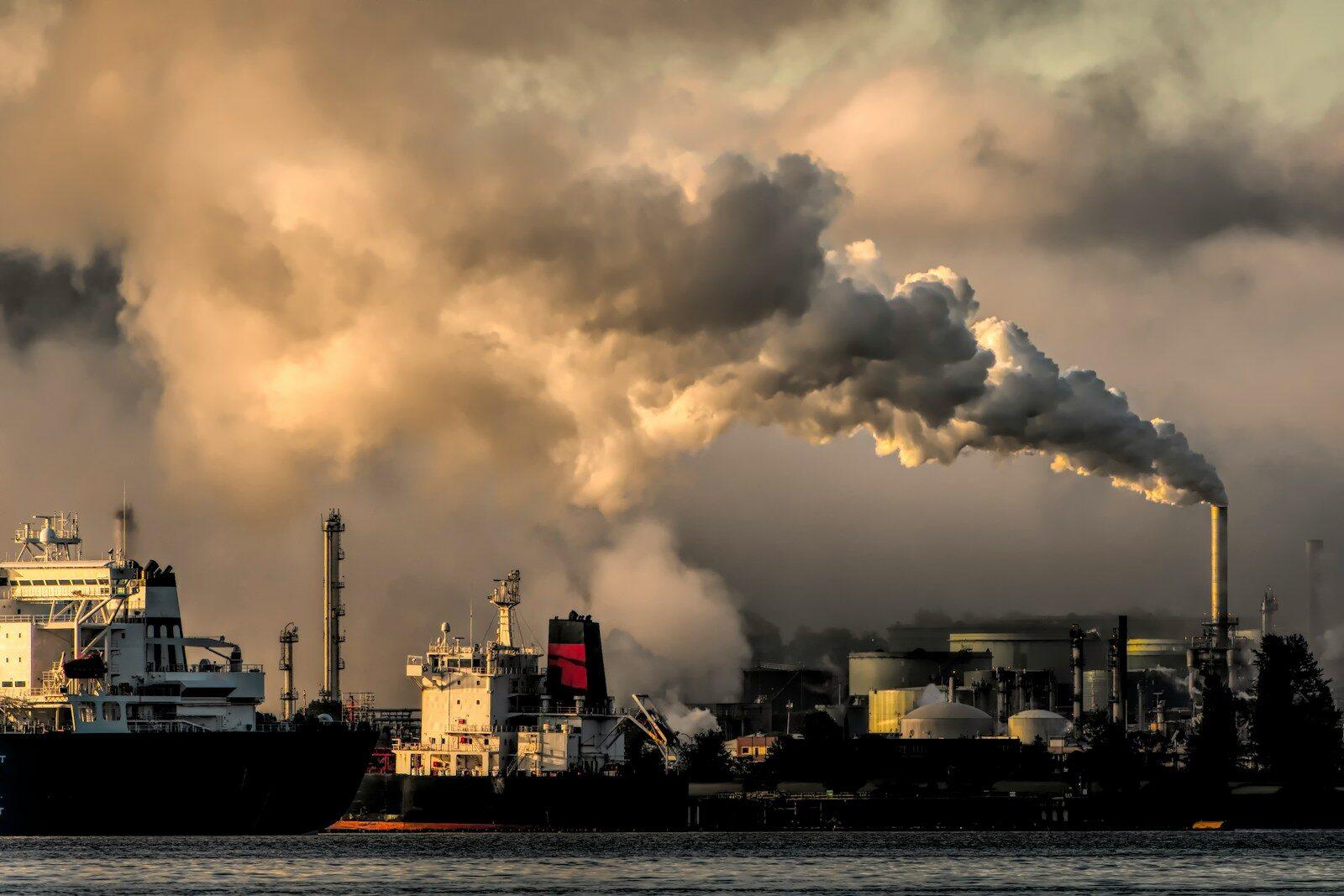
The United Nations (UN) was formed after World War 2 in 1945 by 50 countries initially, today membership has grown to 193 countries, so basically all countries of the world are now members of the UN. The UN’s creation was primarily an attempt to put in place an organization to resolve issues between and among countries in order to try and attain global peace, security, and a better quality of life generally for the people of the world. So not surprisingly, climate change, a development that affects the entire planet, has become a major concern for the organization. The UN itself has defined for us what climate change is, and it has done so in a clear and straightforward way. In its analysis, the UN wants us to know that the change in the climate is not a temporary occurrence, but a long-term development and that the economic and social activities of human beings and the way we have chosen to live our lives are conducive to the emergence of climate change. It argues that “since the 1800s, human activities have been the main driver of climate change, primarily due to the burning of fossil fuels like coal, oil and gas.” To add further clarity, it states, “Burning fossil fuels generates greenhouse gas emissions that act like a blanket wrapped around the earth, trapping the sun’s heat and rising temperatures.”
As the UN argues, greenhouse gases are primarily composed of carbon dioxide and methane, and these are produced primarily “from using gasoline for driving a car or coal for heating a building…clearing land and cutting down forests can also release carbon dioxide. Agriculture, oil and gas operations are major sources of methane emissions. Energy, industry, transport, buildings, agriculture and land use are among the main sectors causing greenhouse gases.” In summary, when human beings burn fossil fuels, gases like carbon dioxide and methane are released into the atmosphere, basically trapped as greenhouse gases.
Greenhouse gases in the atmosphere generated by human activity capture heat from the sun, as well as the heat from the earth’s surface that is warmed by the sun and is leaving the earth on its way into space. At this stage, according to the UN, the heated greenhouse gases cause the earth to not only get warmer but to get warmer at a more rapid pace. This is sometimes called global warming, and this ongoing development, the UN seems to be indicating, is crucial in understanding the process of and responsibility for climate change. The UN states that “many people think climate change mainly means warmer temperatures. But temperature rise is only the beginning of the story. Because the earth is a system, where everything is connected, changes in one area can influence changes in all others.” It also says, “The consequences of climate change now include, among others, intense droughts, water scarcity, severe fires, rising sea levels, flooding, melting polar ice, catastrophic storms and declining biodiversity.”
Historians believe that the advent of considerable volumes of greenhouse gases into the atmosphere began with the ‘industrial revolution’ in England, in or around the late 1700s to the early 1800s. In the 1700s England was already an imperial power with colonial outposts in India and in parts of North America and the Caribbean, where the slave trade, in particular, was an integral part of England’s economy. The industrial revolution in England was beneficially connected to its colonial territories; the territories became reliable markets for its manufactured goods and in turn provided consumer products and other financial benefits to stakeholders in England. For example, the colonies provided consumer goods like sugar, cotton and silk to England and became ready-made markets for manufactured goods like clothing, iron, textiles, and general household and agricultural items.
In England, the growth of factories and industrial facilities enhanced both the speed and volume of production of manufactured goods, creating employment, economic prospects and opportunities while at the same time fostering increased urbanization, which in turn increased the demand for goods from the colonies. Pioneering financiers invested money in colonial activities and profits were largely expatriated to England, which further enhanced its industrial and economic expansion. It was during this period that coal burning, a huge carbon dioxide emitter, entered the industrial space as a form of energy and began the process of significant climate-altering greenhouse gas formation in the world’s atmosphere. England’s method of industrial production was, before long, adopted by most of Europe and the rest of the world. As described by the Open Library at the Oklahoma State University, coal, during the industrial revolution was “plentiful in England and Western Europe” and was “used in enormous quantities as a source of power—particularly for the steam-powered machinery in textile factories and locomotives.” As societies became more urban and industrialized, there was an increased need for additional forms of energy resources, and it was at this stage that the wide-scale use of oil and gas began.
The UN contends that according to the climate scientists, “humans are responsible for virtually all global heating over the last 200 years” and to reduce the impact of climate change, “thousands of scientists and government reviewers agreed that limiting global temperature rise to no more than 1.5 degrees Celsius would help to avoid the worst climate impacts and maintain a liveable climate.” In other words, based on the best professional judgment of thousands of climate scientists and government technocrats, to avoid a climate catastrophe, it is best for the world to avoid increasing the world’s temperature to more than 1.5 degrees Celsius (2.7 degrees Fahrenheit) above the world’s pre-industrial average temperature. That is, no more than 1.5 degrees Celsius over what the global average temperature was before the industrial revolution in England. This has to be quite alarming to readers learning this for the first time, but what may be even more alarming is that the UN concludes that global “policies currently in place point to up to 3.1 Degrees Celsius of warming by the end of the century,” Therefore by the end of the century, the rise in the average temperature is projected to be far exceeding what may be possible for the survival of human beings and other living things on the planet.
The UN contends that some countries produce more greenhouse gases than others and says, “The six biggest emitters, China, the United States, India, the European Union, the Russian Federation and Brazil, together account for more than half of all global greenhouse gas emissions in 2023. By contrast, the 45 least developed countries contribute only 3 percent of global greenhouse gas emissions.” The UN is encouraging every country, and indeed each global citizen, to play a role in fighting greenhouse gas emissions but proposes that countries that emit the most greenhouse gases should shoulder the greatest portion of the climate change burden from the standpoint of global climate adaptation and mitigation.
The UN takes the position that fighting greenhouse gas emissions can also generate beneficial economic activity for countries, this is probably a subtle rebuttal of the occasional argument that implementing climate solutions would absorb too much wealth and thus limit economic growth. In fighting greenhouse emissions and climate change, the UN stipulates there are necessary forms of action nations must take: “Cutting emissions, adapting to climate impacts and financing these required adjustments.” To achieve these, it recommends that countries use three tools it formulated: “The Sustainable Development Goals, the UN Framework Convention on Climate Change, and the Paris Agreement.” The Sustainable Development Goals (SDGs) include themes referred to as ‘goals’ that were ratified by the UN in 2015 as a guide to member countries as they work to eliminate hunger, conflicts, protection of the ocean, ecosystems and biodiversity, among other things. The UN Framework Convention on Climate Change (UNFCCC) is basically a treaty ratified by the UN members in 1992 specifically to deal with climate change issues, mainly working directly with the global community in reducing greenhouse gas emissions. The Conference of the Parties (COP) acts as the decision-making executive entity within UNFCCC and meets every year to address global climate change issues and impacts.
The Paris Agreement is the binding agreement ratified by UN members at the COP meeting in Paris in 2015. It is the signed commitment of UN members to work collectively towards the goals the UN considers urgent, necessary and imperative to limit the impacts of the changing climate. Embedded in this agreement, for example, is a joint global pledge not to allow the average global temperature to exceed 1.5 degrees Celsius above that which existed before the industrial revolution by engaging in activities geared towards reducing greenhouse gas emissions and, among other things, initiate national restructuring to better adapt to the impacts of climate change. The UN Framework Convention on Climate Change and the Paris Agreement are more fully discussed elsewhere.
It’s the official policy and recommendation of the UN that all countries, with urgency, transform their societies away from the use of coal, oil, gas and other fossil fuels as forms of energy and instead incorporate the use of renewable energies like solar, wind and hydropower. Not only are fossil fuel resources not limitless, and therefore may not be sufficiently available for global use at some stage in the future, but when burned to generate electricity, burned in furnaces at factories to facilitate machine and engine operations, in homes to generate heat, or as gasoline and fuel for trucks, cars, trains, ships or planes, the result, as mentioned earlier, is that carbon dioxide and methane are emitted into the atmosphere and generate a negative impact on the stability of the world’s climate. Renewable energies when utilized emit little or no greenhouse gases and are called renewable because they are freely available and are from easily replenished sources. If the sun shines, solar energy can be produced, if the wind blows, wind turbines can produce energy and if we maintain and protect the rivers and waterfalls, hydropower will also continue to generate energy. Renewable energy is sometimes referred to as sustainable energy, clean energy or green energy.
The UN has a warning for countries, it says, “While a growing number of countries are committing to net-zero emissions by 2050, emissions must be cut in half by 2030 to keep warming below 1.5 degrees Celsius. Achieving this means huge declines in the use of coal, oil and gas.” Net-zero refers to the Paris Agreement’s requirement that by 2050 nations should have a procedure in place that at least equally balances their greenhouse gas emission levels with their greenhouse gas reduction levels in order to keep global warming below 1.5 degrees Celsius moving into the future. To achieve this, the UN it seems, is insinuating that the task will be difficult to achieve, and time is of the essence, therefore, emission cuts by countries need to be 50 percent achieved by 2030 if the 2050 goal is to become a reality. To make this 50 percent emission reduction possible the UN proposes that “production and consumption of all fossil fuels need to be cut by at least 30 percent by 2030 in order to prevent catastrophic levels of climate change.” The UN envisions a world where nation states work in collaboration and assist one another to counteract what is essentially a global existential problem. It says, “Climate action requires significant financial investments by governments and businesses. But climate inaction is vastly more expensive. One critical step is for developed countries to support developing countries so they can adapt and move towards greener economies.”