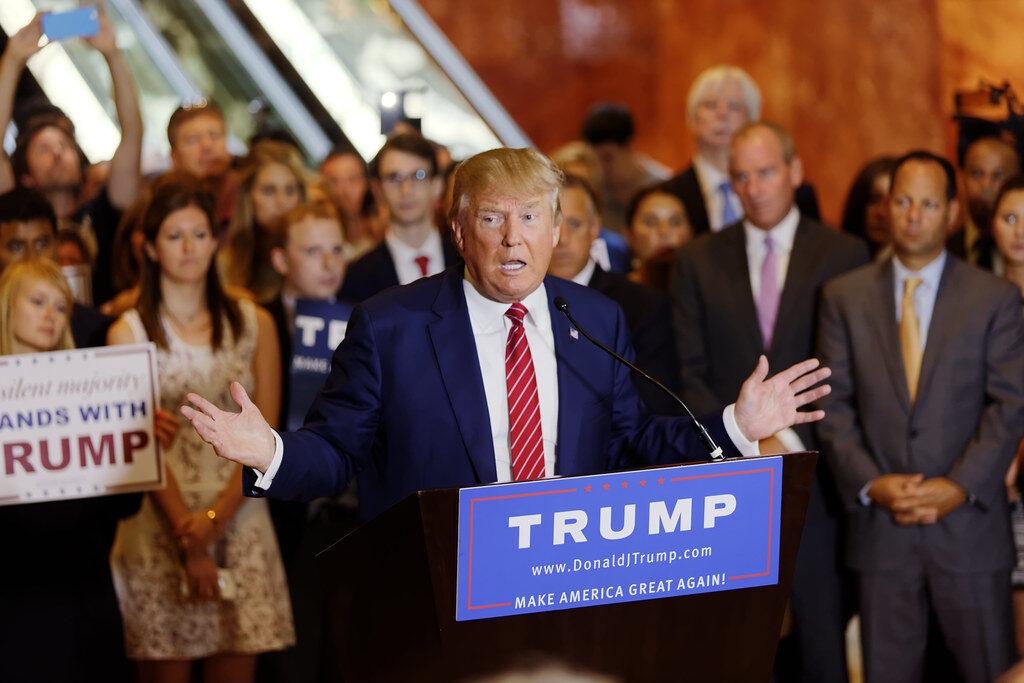
The Trump Administration and climate change
President Trump withdrew from the Paris Agreement in January 2025, the same month he came back to office for a second term. The withdrawal will officially take effect in January 2026, because the Paris Agreement Agreement stipulates that a withdrawal will only be effective one year after a withdrawal intention is submitted to the United Nations. This is the second time he is withdrawing from the agreement, he withdrew in November, 2020 during his first term in office, and this withdrawal was reversed by President Biden who succeeded him in office in January 2021. The Obama administration officially ratified the Paris Agreement in 2016, one of the first countries to do so. At the time, climate change was fully accepted by the US government as a reality, and the United States was one of the world’s most prolific emitters of greenhouse gases, as it is today. The Obama administration considered it a necessity to participate in climate adaptation and mitigation efforts to address climate change as well as to set an example for the rest of the world to follow by signing the Paris Agreement.
President Trump does not believe that climate change is real, and this, it seems, is based only on his own personal intuition, no scientific evidence has ever been given in support of his non-belief. According to the Natural Resources Defense Council (NRDC), a non-profit, Trump stated “we don’t have a global warming problem on the 2024 campaign trail and vowed to ‘drill, baby, drill’ in his speech on inauguration day.” Drill, baby, drill refers to his intention to allow private companies to drill for oil and gas on federal territories that are protected from exploration by environmental laws. Some of the territories are protected for the potential benefits of future generations as well for the benefits of the ecosystems that they provide and the biodiversity that they support.
As Earth.org contends, “the first 100 says of the new Trump administration have fundamentally altered the US role in the global fight against climate change. From mass firings and regulatory rollbacks to the resurgence of coal.” The burning of coal emits more carbon dioxide into the atmosphere probably more than any other fossil fuel, but according to Earth.org “Besides ‘rapidly expedite leases for coal mining on Federal lands’ Trump has instructed Federal agencies to identify and eliminate policies that discourage investment in coal production and coal-fired electricity generation.” Trump doesn’t only disagree that climate change exists, he has also shown an ideological intolerance for the concept, as Earth.org states, “alarmingly, his administration has erased all references to climate change, global warming and environmental justice from federal websites and official records, and halted work on the National Climate Assessment, the most comprehensive source of information about how climate change affects the US.”
In the US, individual states are legally allowed to address climate change impacts within the context of their own states, regardless of and separate from the actions of the federal government, but according to a recent article by Rollingstone.com, “this prospect has recently been put into question because the Trump administration is now trying to prevent states from doing much of anything to limit the impacts of climate change.” For example, Rollingstone claims that the Trump administration is suing the states of New York and Vermount to prevent them from enforcing state laws that seek to hold oil companies partly liable for climate change impacts. Rollingstone also stated that the Trump administration is also suing Hawaii and Michigan in order to dismiss lawsuits that are already before the courts seeking damages from oil companies due to climate issues and that “the Trump administration is working to end California’s stringent motor vehicle emissions standards and its cap-and-trade program.”
Federally, the Trump administration has been busy undoing many of the climate policies of the previous Biden administration, as Earth.org (see above) says, the “administration has also moved to limit the expansion of renewable energy, for example by halting offshore wind lease sales and pausing the issuance of approvals, permits, and loans for both onshore and offshore wind projects.” In 2022 the Biden administration allotted $369 billion in its Inflation Reduction Act (IRA) towards the renewable energy industry in the form of government loans and subsidies, as incentives for companies to expadite and expand research and development in renewable energies, in line with the Paris Agreement’s objectives to reduce reliance on fossil fuels. However, Earth.org reports, “on his first day in office, Trump also ordered a freeze of all unspent funds under the Biden’s 2022 Inflation Reduction Act (IRA).”
The Trump administration is engaging in an effort to weaken and change the objective of the Environmental Protection Agency (EPA). The Agency’s work force has been significantly reduced and as Earth.org again claims, “the Environmental Protection Agency said it would ‘formally reconsider’ a landmark 2009 finding by the agency that greenhouse gases and motor vehicle emissions are a danger to public health” and since then the administration has been trying to eliminate anti-pollution policies, increasing the prospect of deforestation by permitting commercial logging on environmentally protected lands, and weaken the Endangered Species Act, which seeks to protect other living things from extinction, by protecting, among other things, their ecosystems. Some of The administration’s actions are considered illegal and are currently being challenged in the courts.
In an article titled “when it comes to climate change, Trump can only delay the inevitable,” the Canadian Climate Institute argues that “the climate change discussion is now driven by other powerful factors that are outside his control.” It stipulates that one of those factors is growing public awareness, helped by the massive fires and extraordinary floods they are witnessing, that government needs to act to alleviate climate impacts and also that States have the legal authority to act and some, like California and New York, are determined to limit carbon emissions in their states despite Trump’s efforts to the contrary. According to the article, there is an increasing use of electric vehicles and thus a growing lack of demand for oil. This trend, it claims, is creating more lucrative investment opportunities in renewables and the industry has recently surpassed the oil industry in investment funds. An indication that the economic reality of an expanding clean energy industry may now be irreversible.
——————————————————————————————–
