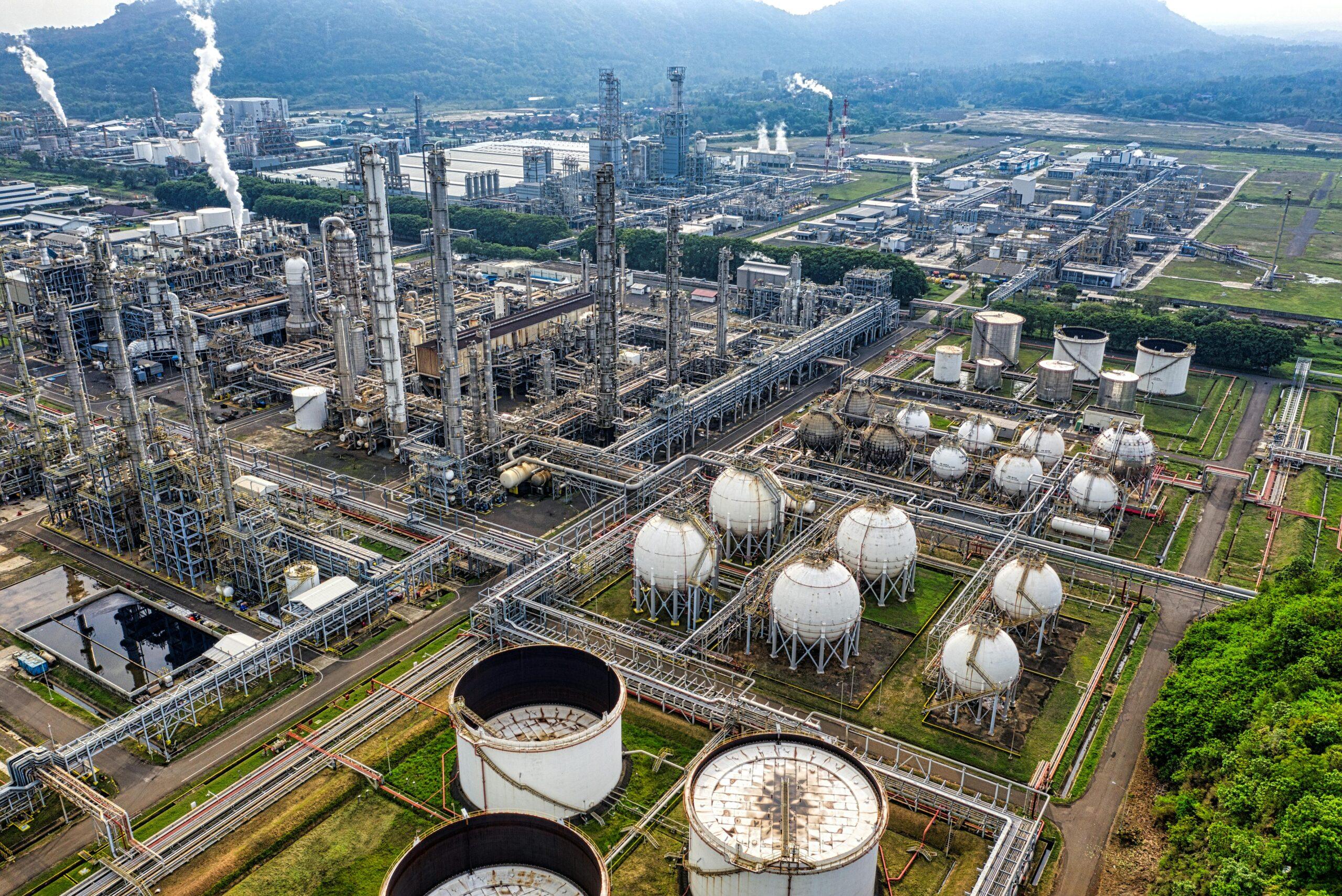
Oil producing countries: The peaceful coexistence of fossil fuel and renewable energy
All major oil producing countries, except Iran, have ratified the Paris Agreement. This means that even though the use of their main export item is considered responsible for the carbon dioxide emissions that are altering the world’s climate, they have come to the realization that the evidence is overwhelming, and on that basis the most logical thing to do is to accept it and begin to adapt their own countries to the changing climate.
An article titled “Transforming Petrodollars: How Oil-Rich Countries Are Developing Clean Energy, Qazinform.com, took a look at how five oil producing countries have embarked on energy diversification, meaning they continue to produce and sell a vast amount of fossil fuel, oil and gas, and at the same time, are putting significant investments into all areas of renewable energy.
In looking at Norway, the article claims that “with a sovereign wealth fund of $1.4 trillion, mostly generated from oil profits, Norway is channeling substantial resources in renewable energy…in offshore wind farms, hydrogen production and carbon capture and storage (CCS) technologies.”
With respect to the United Arab Emirates (UAE), which hosted COP 28 in 2023 and which is a major oil and gas producing country, the article contends that the country accepts both the substance and mission of the Paris Agreement. The article sees this as significant from the standpoint of a new global approach in the fight against climate change. It says the UAE’s “approach offers lessons in leveraging finite fossil fuel resources to build renewable capacity and diversify the economy.” Its investments are mainly in solar and renewable energy technology.
The article also takes a look at Brazil, a major oil producing country, and its venture into the renewable energy industry. Brazil was the host of COP 30, which is also considered a positive gesture towards the substance and spirit of the Paris Agreement coming from a major oil producing country. The article claims that “Brazil generates about 80% of its electricity from renewables, primarily hydropower,” and that Brazil’s “investments in renewable sectors like wind and solar energy create jobs in rural and urban areas, [thus] promoting local economic development.”
For the past three or four years, it has become fashionable for an oil producing country to host the COP United Nations conference. Azerbaijan hosted COP29 in 2024, and as qazinform.com states, “Azerbaijan is dedicating an increased share of its oil wealth to renewable energy. Official figures report that between $1.5 and $2 billion has already been invested in renewable energy projects, including wind, solar and hydropower.”
Azerbaijan’s venture into the renewable energy industry is rationalized on the basis that “oil money is being reinvested to secure Azerbaijan’s long term energy future. Investments in renewables aim not only to diversify the economy but also to preserve our oil wealth for future generations,” Qazinform.com reports.
In looking at Kazakhstan, another oil producing country, the article states, “Kazakhstan has 147 renewable energy facilities…including 59 wind farms, 46 solar power plants, 39 hydropower plants and 3 biogas plants,” and goes on to argue that “in 2023, investments directed toward the green [renewable energy] economy in Kazakhstan reached 201 billion tenge,” or about 393 million US dollars. It also explained that “the country could play a key role in the global shift toward a low-carbon future while also addressing its own environmental challenges.”
In 2021 Saudi Arabia embarked on what it called the ‘Saudi Green Initiative’ (SGI), essentially to combat the effects of climate change. At an SGI forum in 2024, sgi.gov.sa, it was revealed that “with total investment exceeding $188 billion [US](SAR 705 billion)…the Saudi Green Initiative is a key vehicle to deliver Saudi Arabia’s goal to create a greener future for all by reducing emissions, combating desertification and safeguarding ecosystems.”
Qatar is one of the world’s leaders in the production and export of liquefied natural gas (LNG); therefore, according to the Middle East Council of Global Affairs, mecouncil.org, its reliance is not overwhelmingly on oil, like for example, Saudi Arabia and UAE, and so it “has consistently advocated for the increased use of natural gas as a low carbon transition fuel within a diversified energy mix.” When burned, natural gas is known to emit less carbon dioxide into the atmosphere than oil and because of this, according to mecouncil.org, the anti- carbon and anti-greenhouse gas fight has been mainly directed at oil and this has taken some pressure off countries like Qatar, for now, at least. Regardless though, Qatar has embraced the move towards renewable energy, and for several reasons, as mecouncil.org sees it, there are upsides to being a player in the renewable industry. For example, it portrays Qatar as a responsible nation, and participation acts as a counter argument against criticism of the country’s LNG reliance. Also, the adoption of renewable energy could help save Qatar’s LNG resources from facing near-term depletion.
Qatar is not focusing on ‘net-zero’ carbon emissions like other oil and gas producers. According to mecouncil.org, it’s taking an industry-by-industry approach, and investment in capturing and removing carbon dioxide from gas is one of those approaches. In Qatar, “Key to the LNG decarbonization planning is the north field expansion project, which envisions the establishment of the largest carbon capture and storage (CCS) facility in the LNG industry,” mecouncil.org says, and that Qatar is also placing a fair amount of emphasis on the development of solar energy, “by 2030 QatarEnergy’s solar capacity is projected to reach 4 GW, contributing nearly 30% of the nation’s power generation.”
Kuwait is a major oil producing country, and its electricity production is still predominantly dependent on oil. According to the Gulf International Forum, gulfif.org, “the country’s heavy dependence on oil has not only exposed it to volatile global markets but has also left its energy infrastructure ill-prepared to meet its growing domestic electricity demand”. Kuwait is beginning the process of incorporating renewables into its electrification system in joint efforts with the private sector, but as gulfif.org states, “It is important to note that Kuwait’s progress appears to be in its early stages when compared to its Gulf Cooperation Council (GCC0) counterparts.” Gulfif.org argues that the extreme heat experienced by Kuwait in 2024, and the accompanied power cuts, was a wake up call for the government. Temperatures were in the range of 50 degrees Celsius or 122 degrees Fahrenheit, creating almost an untenable situation in terms of demand for electricity. It argues that political instability is partially responsible for Kuwait’s lack of progress in energy diversification.