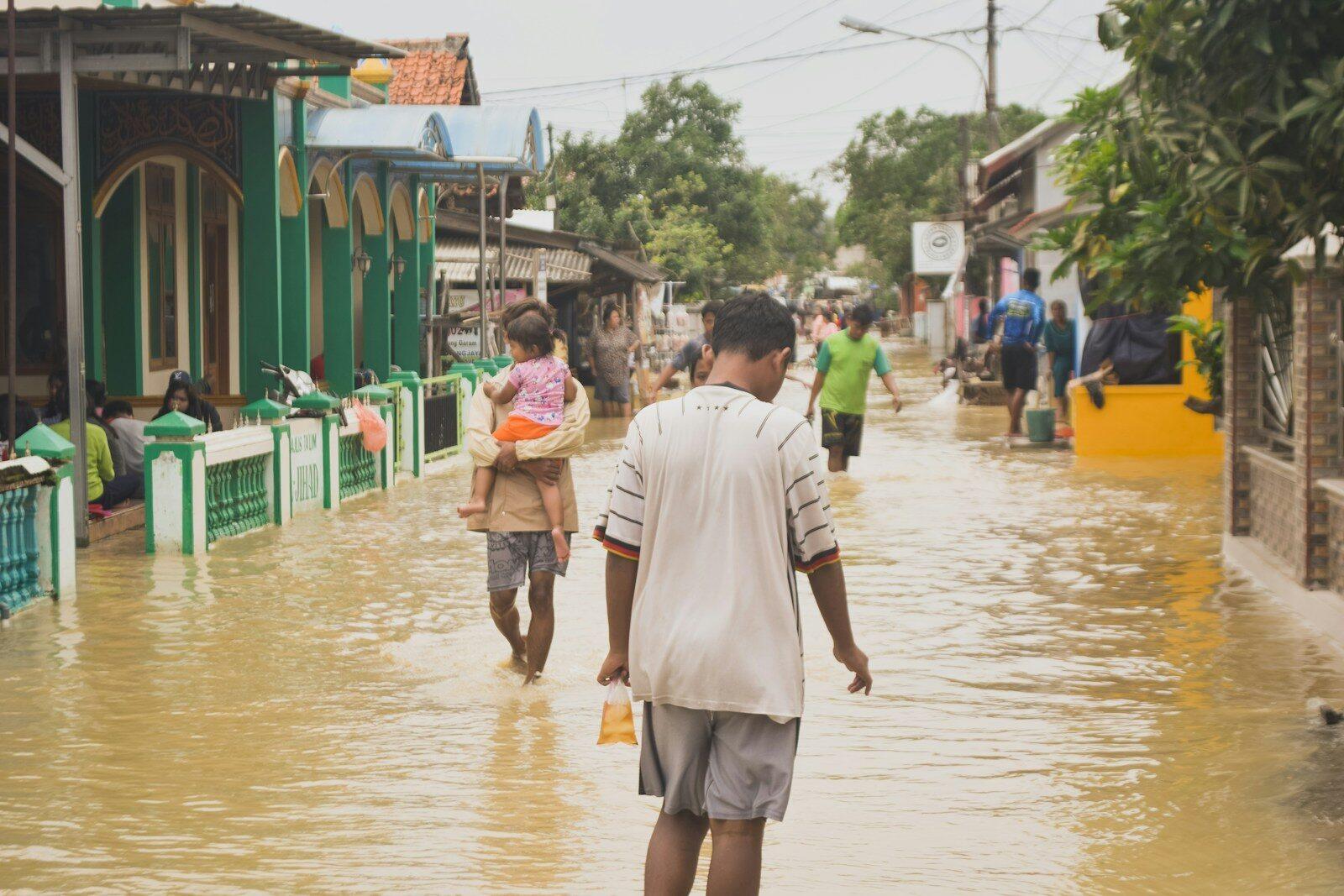
people walking on street during daytime

Nigeria’s main climate change challenges

Currently, the most severe climate issues affecting Nigeria are heatwaves and floods. Based on a report by carbonbrief.org, beginning in early 2024 “Africa’s most populous nation Nigeria, has faced prolonged stretches of severe heat,” and “with temperatures reaching a record 44.8C in Sokoto a city in north-western Nigeria on 1st April.” 44.8C is equivalent to about 112 degrees Fahrenheit. The potential arrival of this heatwave was announced in February, 2024 by the Nigerian Meteorological Agency (NIMET), thecable.ng, making clear that the the heat would be extensive and even affect the nation’s biggest city of Lagos. Citizens were advised to stay hydrated and wear light clothing and try and stay in cool environments, among other things.

Heatwaves also became a concerning issue into 2025. As shown by the dailypost.ng, the Nigerian Meteorological Agency (NIMET), publicly warned in April, 2025 of heatwaves in the city of Kano and 17 other northern areas, including the capital city of Abuja. It stated that the average temperature would be in the 40C degree range and again warned citizens to take precautionary measures, as the heat would pose risks to health and safety.

There is a long history of heatwaves affecting the quality of life of Nigerian citizens. For example, wikiwand.com reports that “in March 2019, Nigeria experienced one of its most intense heat waves, with temperatures exceeding 45°C (113°F) in some northern states. The extreme heat led to increased hospital admissions and power shortages. Many communities in Sokoto, Kano, and Maiduguri reported water shortages, and cases of heat related illnesses surged, particularly among children and the elderly.” It also reported that “The 2020 heat wave saw record breaking temperatures, particularly in states such as Katsina, Bauchi, and Yobe. …the power grid was heavily strained as electricity demand for cooling soared, resulting in frequent blackouts across major cities,” and “the 2023 heat wave was particularly severe, with cities like Abuja, Lagos, and Kano recording temperatures above 42°C (108°F). Reports indicated a rise in heat-related illnesses and economic slowdowns in affected regions. Several schools and businesses had to adjust their operating hours to minimize exposure to extreme heat.”

With regard to floods, Environewsnigeria reports that executives with Nigeria’s National Emergency Management Agency (NEMA) “said that 1,243,638 Nigerians were displaced by floods in 2024, with 1,237 lives lost.” and additionally, the floods “affected a total of 5,264,097 persons, 1,439,296 farmlands and left 16,469 persons injured.”

As for 2025, Aljazeera reports that in June 1st, “Flash floods triggered by heavy rains have devastated a central Nigerian state, killing at least 150 people and displacing thousands since Thursday, and rescue workers say the toll could rise.” It states further that “Flash floods hit Mokwa, a market town located in Nigeria’s north-central Niger State. It followed intense rainfall that began about 3am (02:00 GMT) on Thursday, according to the Nigerian Red Cross Society.” A combination of factors contributed to the severe floods, according to Aljazeera “experts said the frequency and severity of floods in Nigeria have increased due to climate change, unregulated construction and poor drainage infrastructure.”

Renewable energy use in producing electricity in Nigeria is marginal and in fact fossil fuels accounted for 85% of electricity generation in 2024, according to the Switzerland based digital publisher, mdpi.com. Of the 85%, it claims oil accounts for 33%, coal for 27% and gas for 25%. However, the article is optimistic that Nigeria before long will begin to embark on a clean energy transition process, it claims “Nigeria is on the point of a transformative shift towards a more sustainable and renewable future. Endowed with a wealth of renewable resources such as solar, wind, hydropower, and biomass resources.”

Nigeria’s electric vehicles (EV’s) market is currently relatively small but there is hope for growth primarily because there is increasing national enthusiasm about the industry and the country’s population size is in excess of 200 million, a rather good combination. On Electric Vehicles, the publication techpoint.africa reports that “there are now an estimated 15,000 to 20,000 on Nigerian roads, so far in 2025” [April]. Local companies are stepping forward to help, the article claims that “New Electric, for instance, has reported $14 million in revenue over the past 14 months and plans to install 300 charging stations in Abuja and Lagos by August 2025”. Techpoint.africa is also projecting the EV market “to grow at a compound annual growth rate (CAGR) of 6.8% from 2025 to 2031.” It states that the current high cost of the vehicles and insufficient charging facilities are posing difficulties, but it thinks current government imposed tax deductions and import duty relaxation will induce more sales, investments and overall efficiency in the industry.

—————————————————————————————————-