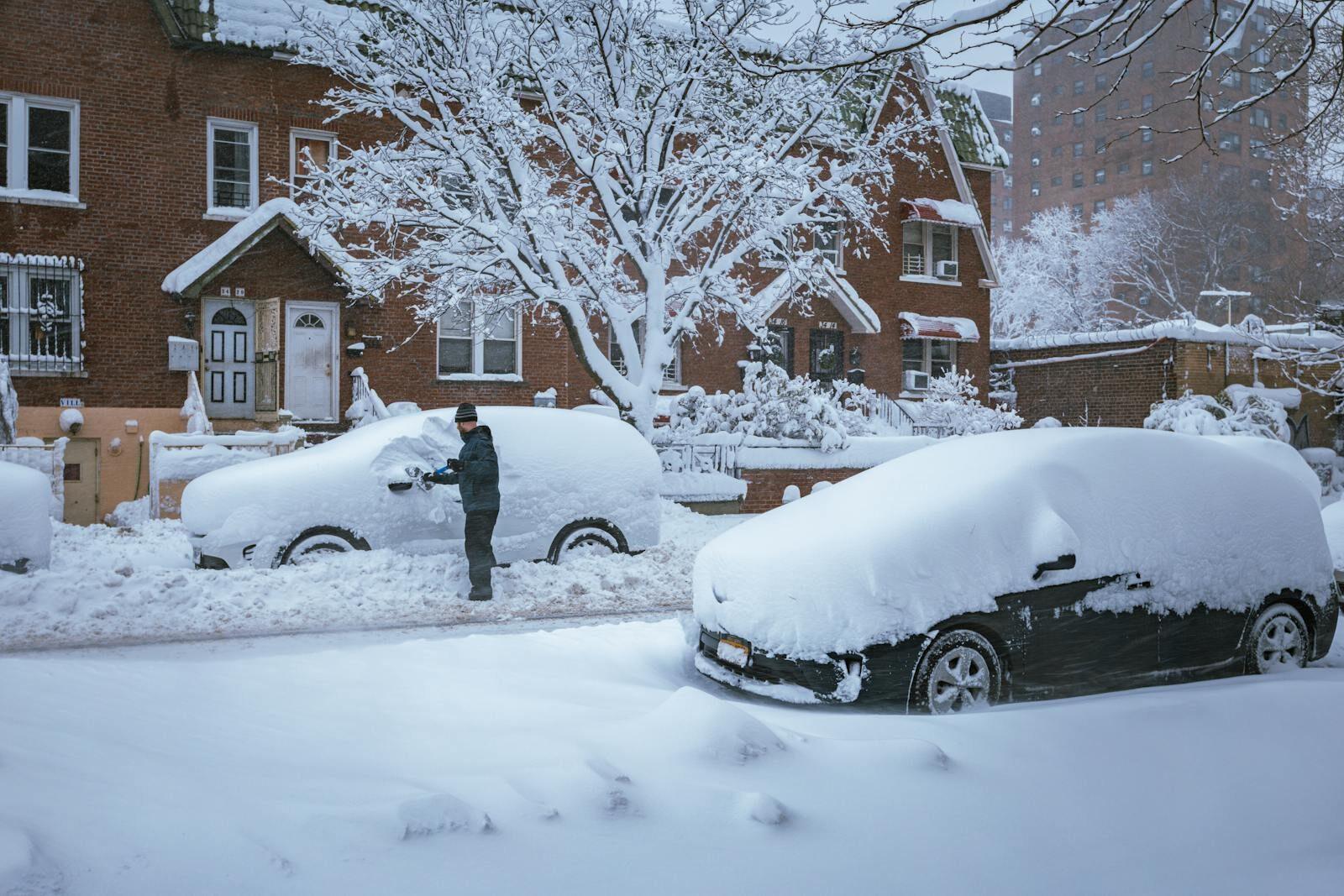
Global warming, climate change and cold snowy winters.
Carbon dioxide, methane and other gases are released into the world’s atmosphere when fossil fuels like oil, gas and coal are burned to provide energy for electricity, road transportation, heating and other necessities. The gases that are released do not just disappear into oblivion but subsequently form, what is like a sheet of greenhouse gases over the world’s atmosphere and warm the earth by trapping the heat that is leaving the earth on its way into space. This global warming leads to the changing of the world’s climate with consequences like more intense heatwaves, droughts, floods and wildfires, among others.
We have seen the consequences of climate change play out across the world in the summertime but when wintertime comes around, some people are asking, why are there cold winters, sometimes with lots of snow, if global warming and climate change are real ? As Time Magazine says “the impacts of climate change might be far more noticeable during the summer—in 2024 the U.S. had its fourth hottest summer on record. But rising global temperatures are changing winters too.” The magazine quotes a geography Assistant Professor as saying “ ‘the existence of winter doesn’t disprove climate change… Climate change is a long term trend that makes winter warmer, but it’s not erasing the occurrence of winter.’ ” The Professor also says ” ‘a warmer atmosphere will carry more moisture, this means that more of that moisture will be released as precipitation. A slightly warmer but still below freezing temperature can also produce more snow than during extreme cold, so some areas might see more snow as temperatures rise.’ ”
Canada is known for its cold winters that are sometimes accompanied by intense snowfalls. Ouranos, an organization founded in part by the Government of the Canadian Province of Quebec, published an article on December 18, 2025, with forecasts on the future impacts of climate change, on the Province’s winters. At the outset it says “Quebec is known for its harsh winters, snowy landscapes and iconic winter activities. But due to climate change, these seasonal traditions are changing rapidly. The winter, as well as the transitional seasons of autumn and spring, will change over the next few decades. Temperatures, precipitation and snow cover will stop following old patterns.” It goes on to say that “across the province, projections indicate an increase in precipitation during the winter. In more northern [provincial] regions, this increase will mainly take the form of snow, while in the south, a larger proportion of this precipitation will fall as rain.” Based on a study by the ‘Journal of Geophysical Research,’ the Ouranos article states “that although average snowfall is expected to decrease in the southernmost regions of Quebec, snowstorms will continue to occur there. A warmer atmosphere retains more moisture, which, during colder winters, can promote snowfall as intense as or even more intense than today.”
In conclusion the article says “Quebec will not lose its winters, but they will be shorter and milder. Snowstorms will continue, but rain will gain ground. These changes require rapid, concerted adaptation to preserve safety, the economy and the winter culture that is part of Quebec’s identity.” So global warming or climate change will not eliminate cold winters, but the extent and nature of the winters will change. Winters will be shorter, but the warmer air, which absorbs more moisture and brings more intense rainfall in the summertime, will also bring more intense snowfall in the wintertime. Winters will get shorter but not warmer.