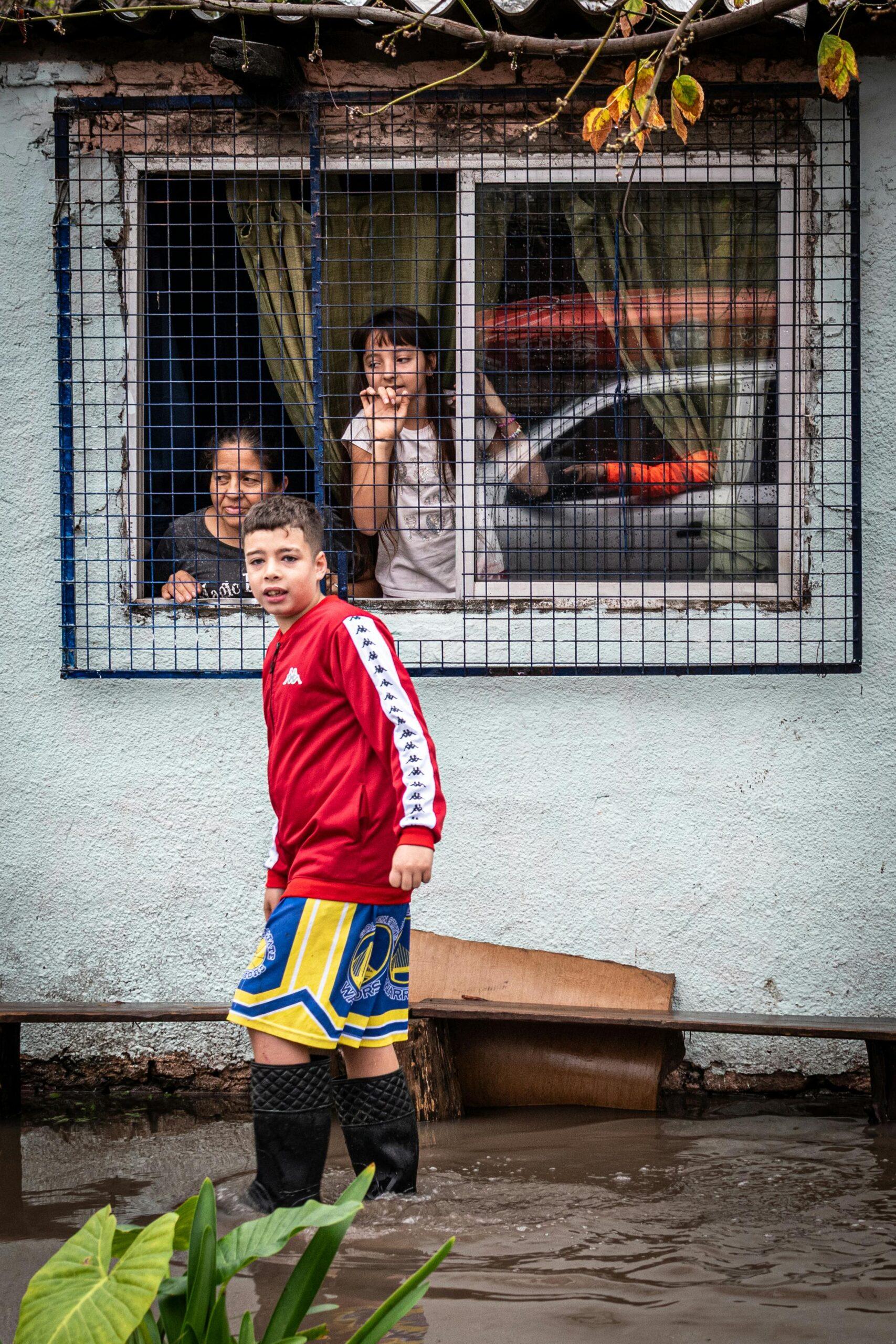
Europe and its share of climate related challenges

Heatwaves, droughts, wildfires, floods and other climate related issues, have been posing major problems for European countries. For example, widespread heatwaves, droughts and wildfires were major features of climate change in Europe in the summer of 2025. Earth.org publishing on August 18, 2025, contends that “prolonged heatwaves and drought conditions are turning many European regions into tinderboxes, with Spain and Portugal among the hardest-hit countries.” It states that “Spain is currently battling 20 major wildfires as a heatwave affecting the country shows no signs of abating. Authorities deployed 1,900 soldiers to battle the fires, 12 of which are affecting the northwestern region of Galicia. Temperatures exceeded 44C in several parts of the country this weekend as authorities warned of a very high risk of fires across ‘practically the entire country.’ ” Portugal was also in dire straits, according to Earth.org “Neighboring Portugal deployed more than 5,000 firefighters as wildfires swept through northern and central regions. The burnt forest area in the country this year is already 17 times higher than in 2024.”

With regard to 2024, an article by The Guardian states that “the home-wrecking storms and floods that swept Europe last year [2024] affected 413,000 people, a report has found, as fossil fuel pollution forced the continent to suffer through its hottest year on record.” It argues that severe adverse weather events “tore through central Europe in September and eastern Spain in October, which accounted for more than 250 of the 335 flooding deaths recorded across the continent in 2024.” The Guardian clearly associates the events with climate change, it says “previous studies have found the disasters were made stronger and more likely because of global heating, which lets clouds pummel the ground with more rain.”

The Guardian is basing its article on the ‘European State of the Climate’ report 2024 (ESOTC 2024), which was a joint publication by Copernicus Climate Change Service (C3S) and the World Meteorological Organization (WMO), and It goes on to say that “south-eastern Europe experienced its longest heatwave on record in July 2024, searing more than half the region for 13 days in a row, while high heat across the continent contributed to destructive wildfires that affected 42,000 people, the [ESOTC 2024] report found.” It also says “about one-quarter of Europe’s burnt area last year came from devastating wildfires in Portugal in September, which burned about 110,000 hectares in a single week.” C3S is a European Union’s earth climate monitoring agency and the WMO is a United Nations entity, formed to foster global collaboration regarding the study of the climate and the environment, among other things.

Concerning 2023, a headline of an article in the Independent says “Europe hit by heatwaves, floods and wildfire in 2023 as climate crisis grows.” This article also relies to some extent on the joint findings of C3S and WMO in the ‘European State of the Climate’ report, the 2023 version (ESOTC 2023). The article refers to the ESOTC 2023 report as saying “heat-related deaths are on the rise in Europe, while 63 lives were lost to storms, 44 to floods and 44 to wildfires in 2023, and weather and climate-related, economic losses were an estimated 13.4 billion euros (£11.5 billion).” It further contends that “north western Europe saw its warmest June on record, while much of Europe was hit by heatwaves during the ‘extended summer’ from June to September.” There were severe floods in Europe in 2023 as well, according to the article “major river basins including the Loire, Rhine and Danube saw record or near-record high river flows due to a series of storms between October and December.” Again, referring to the ESOTC 2023 it says “four fifths of the economic losses in 2023 were due to flooding, which affected an estimated 1.6 million people in Europe.” Wild fires and droughts were also major issues in Europe in 2023, “Wildfires burned an area the size of London, Paris and Berlin combined, with Europe’s largest ever fire in Greece covering 370 square miles, and there were periods of drought in the Iberian peninsula and eastern Europe,” according to the article.

The European Union (EU) has been highly successful in replacing fossil fuels with renewable energies in its electricity production process, as Ember-Energy on February 10, 2026 states “71% of the EU’s electricity was generated from low-carbon sources in 2025.” It says the 71% includes 30% from wind and solar, and 23% from nuclear power and that Nuclear remains the EU’s largest “single source of power.” It further argues that “the European Union (EU) is leading the way on wind and solar, which reached 30% of EU electricity in 2025, higher than fossil power (29%) for the first time on record, up from 20% just five years prior.” Coal, a major greenhouse gas generator, is experiencing a huge decline in its use in EU’s electricity generation, “Coal power is in terminal decline in the EU, falling to 9.2% of EU power in 2025, a new historic low, and down from nearly a quarter of EU electricity generation (24.6%) ten years prior,” according to Ember-Energy. Ember-Energy’s analysis excludes the United Kingdom (UK), which is discussed elsewhere. As you know, the UK is in Europe but it is not a member of the EU.

The International Council on Clean Transportation (ICCT), argues that Electric Vehicle (EV) sales in Europe grew appreciably in 2025. In a publication, it argues that “battery electric and plug-in hybrid cars together topped 50% of sales in the Nordic countries and the Netherlands in 2025. Among Europe’s largest markets, Germany and France reached 30% and 27%, respectively, while Italy and Spain are catching up at 12% and 20%, respectively.” Speaking more generally, it says “the market continued to expand. Battery electric and plug-in hybrid vehicles together reached a combined 28% market share in 2025—an increase of 6 percentage points compared with 2024. Over the same period, conventional internal combustion engine vehicles lost 10 percentage points of market share, while full and mild hybrids gained 3 percentage points.” The European Union (EU) has what is called the ‘Clean Air for Europe’ regulations (CAFE). These regulations legally require vehicle manufacturers to progressively limit the carbon dioxide emitted from the vehicles they make, that are destined for the European Union market. CAFE’s declared ultimate goals include the limitation of air pollution to limit its negative impact on the health of citizens as well as to limit the pollution’s contribution to the carbon dioxide which induces greenhouse gases that affects the climate. As stated by Cubic3.com, CAFE’s grand objective is “focused on an eventual ban on new combustion [fossil fuel] car registrations by 2035, the CAFE standard has gradually been reducing the threshold of allowed CO2 [carbon dioxide] emissions per vehicle. As of this year, the limit – previously 107 g/km, [107 grams of CO2 per kilometer, per vehicle], in 2023 – will be lowered to 94g/km [in 2025]. Non-compliance [with CAFE] could result in heavy fines, with a potential cost of €95 per excess gram of CO2 per vehicle sold. Depending on the number of automakers who struggle to make these targets, Europe’s automotive industry could face up to €15 billion in fines for excess carbon emissions.”

Yielding to the lobbying from vehicle manufacturers, the EU has recently made some adjustments to its CAFE regulations. The 94 grams per kilometer rule for 2025 will instead be averaged over the three year period from 2025 to 2027. This is considered a welcome concession by many, however, the manufacturers are continuing to press for further loosening of the requirements given the scope of the potential cost to themselves if, for whatever reason, they fail to comply with the regulations by the expiation date in 2027.

In terms of public policy and climate change, the EU has shown that it is taking its signing of the Paris agreement seriously. For example, in 2020 it brought about what is called the ‘European Green Deal,’ which is basically a set of ideas and approaches geared toward achieving net-zero carbon pollution by 2050. Out of this set of policies came the ‘European Climate Law’ which now gives legal enforcement to the Green Deal rules. The European Green Deal is the overall grand plan to replace fossil fuel use in manufacturing, electricity generation, and other areas, with renewable energies. CAFE is a facet of that grand plan, but focusing exclusively on road transportation pollution reduction.

————————————————————————————