Climate change impacts on the Oceans
A large portion of the world’s greenhouse gas emissions and heat, is absorbed by the Ocean, therefore the Ocean plays a key role in the cooling of the planet. According to the United Nations (UN), “The ocean generates 50 percent of the oxygen we need, absorbs 30 percent of all carbon dioxide emissions and captures 90 percent of the excess heat generated by these emissions. It is not just ‘the lungs of the planet’ but also its largest ‘carbon sink’ – a vital buffer against the impacts of climate change.”
Sea level rise is one of the primary impacts of climate change. According to Oceana, a non-profit engaged in the Ocean’s preservation efforts, greenhouse gasses increase the planet’s temperature, and the warming temperature and melting ice, are contributors to sea level rise. Areas of the world that previously remained mostly frozen are now melting at a rapid pace and thus increasing the volume of water in the Ocean. As Oceana states, “the melting of glaciers, ice caps and the greenland and Antarctic ice sheets-the melting of which is exacerbated by warming ocean-are also contributing to the rising seas.” Sea level rise contributes to flooding and the absorption of territories. Small Island Nations are particularly vulnerable to this and today this issue is of primary significance to small countries in the South Pacific region and elsewhere. According to Oceana “in 2006 the first inhabited island was lost to rising sea levels. The Island of Lohachara, home to some 10,000 people, sank beneath the surface of the Bay of Bengal.” On the world’s map, the Bay of Bengal is the Ocean situated between India and Myanmar (Burma). Developed countries can also lose territory to sea level rise, as Oceana contends, “even some of the world’s most important and heavily populated cities, such as New York, London and Bangkok, are at risk of disappearing under the rising waters.”
When the planet gets warmer more carbon dioxide is absorbed by the ocean and this is leading to what is termed, Ocean Acidification. As Oceana puts it, “as carbon dioxide levels increase in the atmosphere, the amounts the oceans absorb also increases, leading to chemical changes that result in the oceans becoming more acidic.” Acidification has physical effects on the ocean species and coral reefs. When the Ocean becomes more acidic “corals and other organisms will find it increasingly difficult to build new skeletons and shells and those that already exist may begin to dissolve,” Oceana says.
Increased Ocean temperatures is likely to be a contributing factor to the intensification of storms and hurricanes around the world, Oceana says. “As storms move across the open ocean they pick up energy from the warm ocean surface and become more powerful,” and that “the more heat in the ocean’s surface , the more potential exists for strong winds and heavy rains to be created.”
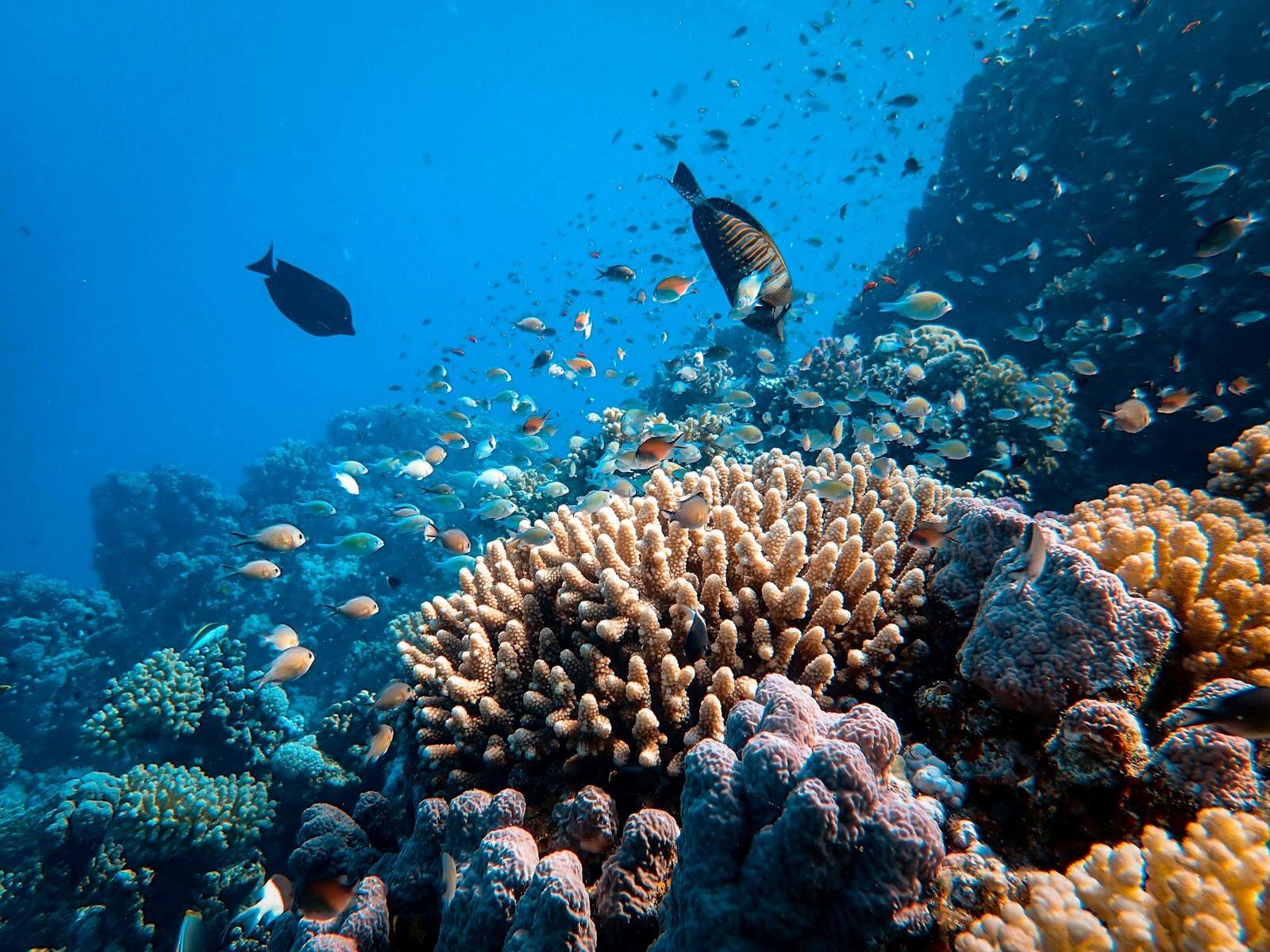
Heatwaves occur both on land and in the Ocean and they affect living things in the Ocean like they affect humanity and other living things outside of the ocean. As the International Fund for Animal Welfare (IFAW) contends, “marine heatwaves-prolonged periods of unsually warm ocean temperatures-are becoming longer, more frequent, and more intense due to climate change. These heatwaves can persist for days, weeks or even months, affection large areas of the ocean and reaching depths of hundreds of metres.” An effect of all of this is that some marine species are driven from their ecosystems or habitats and are forced to establish residence in cooler but unsuitable areas of the Ocean. Those that do not leave, or are too slow to leave, may die. Coral bleaching is another phenomenon of marine heatwaves, it happens, according to IFAW, “when corals expel the symbiotic algae living within their tissues in response to prolonged exposure to high temperatures.” When this happens corals become vulnerable to diseases and may eventually die. Corals combine to form coral reefs and coral reefs provide shelter and food for several ocean species.
Biodiversity in the Ocean refers to the collective of living things that live there, like fish, mammals, plants, corals etc. and all of these living things are vulnerable to the impact of climate change. As IFAW contends “the rising sea levels , rising temperatures, ocean acidification and more have all contributed to a significant loss of marine biodiversity.” IFAW stressed the significance of coral reefs. “Dubbed the ‘rainforests of the sea’, coral reefs are home to more than 25% of marine life in the world. Coral reefs boast an incredibly biodiverse ecosystem, home of more than 4,000 fish species as well as turtles, plants, invertebrates and marine mammals.” According to IFAW, the Intergovernmental Panel on Climate Change (IPCC), an agency of the United Nations and discussed elsewhere, stipulates “that 70 to 90% of coral reefs will disappear if the planet’s temperature increases by 1.5 degrees celsius. If global temperatures rise by 2 degrees celsius they project that 99% of coral reef will disappear.”
The warming of the Ocean could also have an economic and social impact on millions of people around the world. Many depend on fish as everyday food and probably just as many depend on it as an industry creating reliable employment. A reduction in the Ocean’s ability to produce the required quantity and quality of fish would create a fair amount of global economic and social hardships.
Another major issue that affects the Ocean’s health is that it has become a reservoir for debris. A Fair amount of non-biodegradable plastics, for example, has found its way into the ocean and according to scientists, has become a major threat to ocean species. Therefore, in an effort to protect the ocean, every year since 2008 the United Nations has proclaimed June 8th as ‘World Oceans Day’. In 2025 the day was celebrated with a UN conference in France under the theme “Wonder: Sustaining what sustains us”. As proclaimed by the UN, “the purpose of the Day is to inform the public of the impact of human actions on the ocean, develop a worldwide movement of citizens for the ocean, and mobilize and unite the world’s population on a project for the sustainable management of the world’s oceans.”
——————————————————————————————–
